

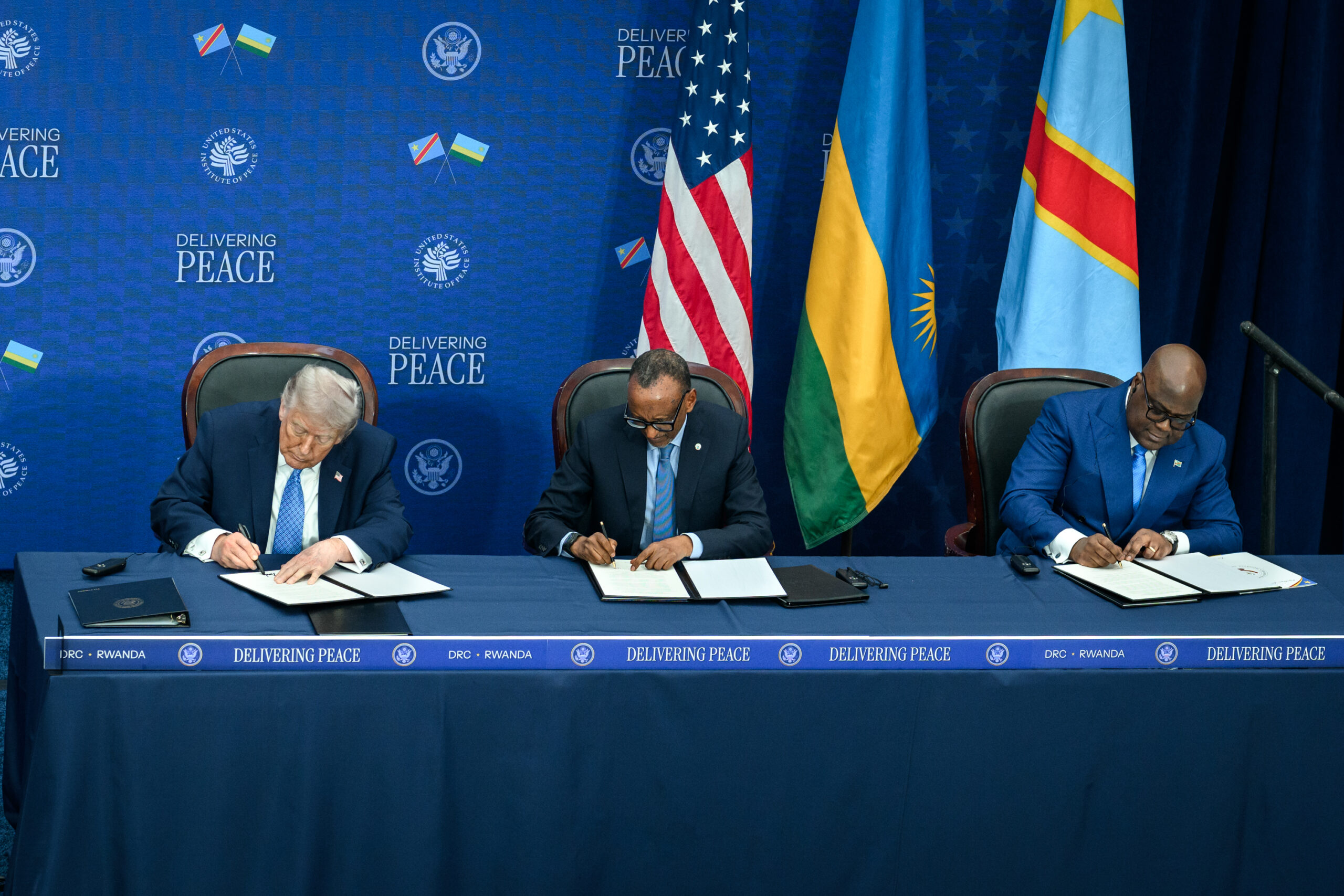
The peace deal signed yesterday in the United States between Rwanda and the Democratic Republic of Congo was immediately celebrated as a “historic breakthrough” for regional stability. Washington framed the agreement as diplomatic leadership in ending decades of violence in eastern Congo. But anyone who understands the geopolitical value of Congo’s minerals knows this deal had very little to do with peace—and everything to do with America’s access to critical resources.
Let’s start with the obvious: Eastern Congo is home to the world’s largest reserves of cobalt, coltan, nickel, copper, and several rare earth minerals essential for electric vehicles, batteries, microchips, and weapons systems.
These resources form the backbone of the 21st-century industrial economy. Without them, there is no renewable transition, no AI hardware boom, and no modern military advantage. The United States knows this. China knows this. Europe knows this. And so does every multinational corporation designing the future.
For years, Washington has watched China dominate Congo’s mining sector through long-term concessions and infrastructure swaps. As U.S.–China competition escalates, the White House desperately needs new leverage in mineral-rich regions. Yesterday’s peace deal provides exactly that: a diplomatic doorway into Congo’s resources, under the moral cover of “conflict resolution.”
Rather than being driven by humanitarian concern for suffering Congolese communities, the agreement reads like the opening chapter of a new resource strategy. The U.S. wants stable supply chains, predictable partners, and political structures it can influence. Ending hostilities between Rwanda and Congo—hostilities that conveniently overlapped with mineral corridors—is a strategic move to ensure American corporations can operate without disruption.
In essence, Washington needs the violence to stop not for peace, but for predictability, investment access, and long-term mineral security.
Then there is Rwanda. The country has long been accused of benefiting indirectly from eastern Congo’s mineral wealth through illicit flows, networks, and rebel-backed smuggling routes. The peace deal quietly places Rwanda in a stronger diplomatic position, transforming it from an aggressor into a “partner for stability.” In return, the U.S. secures a loyal ally who can safeguard American strategic interests in the region—much like how Rwanda has been used in other U.S. military arrangements on the continent.
Meanwhile, the Democratic Republic of Congo enters the deal with weakened bargaining power. Congo’s government has historically struggled to secure full control over its mineral-rich east. By bringing the negotiations to American soil, the U.S. ensures the terms will align with U.S. policy priorities—not Congolese sovereignty. Peace becomes a convenient tool, a polished narrative masking old patterns of exploitation.
Let’s be clear: of course peace is desperately needed. Civilians in North Kivu and Ituri have suffered unimaginable violence. Any reduction in conflict is welcomed. But pretending this deal is an act of pure morality is naïve. Great powers do not invest billions of dollars and diplomatic capital out of compassion—they do it to protect their interests.
What we witnessed yesterday was not a peace agreement.
It was resource diplomacy.
It was strategic positioning.
It was the United States inserting itself between Congo’s minerals and China’s influence.
The world can hope that some peace comes from this arrangement, but let’s not mistake intentions. The real motive behind the Rwanda–Congo deal was not humanitarian—it was geoeconomic control, wrapped in the language of stability.
And as long as Congo’s minerals fuel the global economy, foreign powers—including the U.S.—will continue shaping “peace deals” that serve them first, and Africa last