

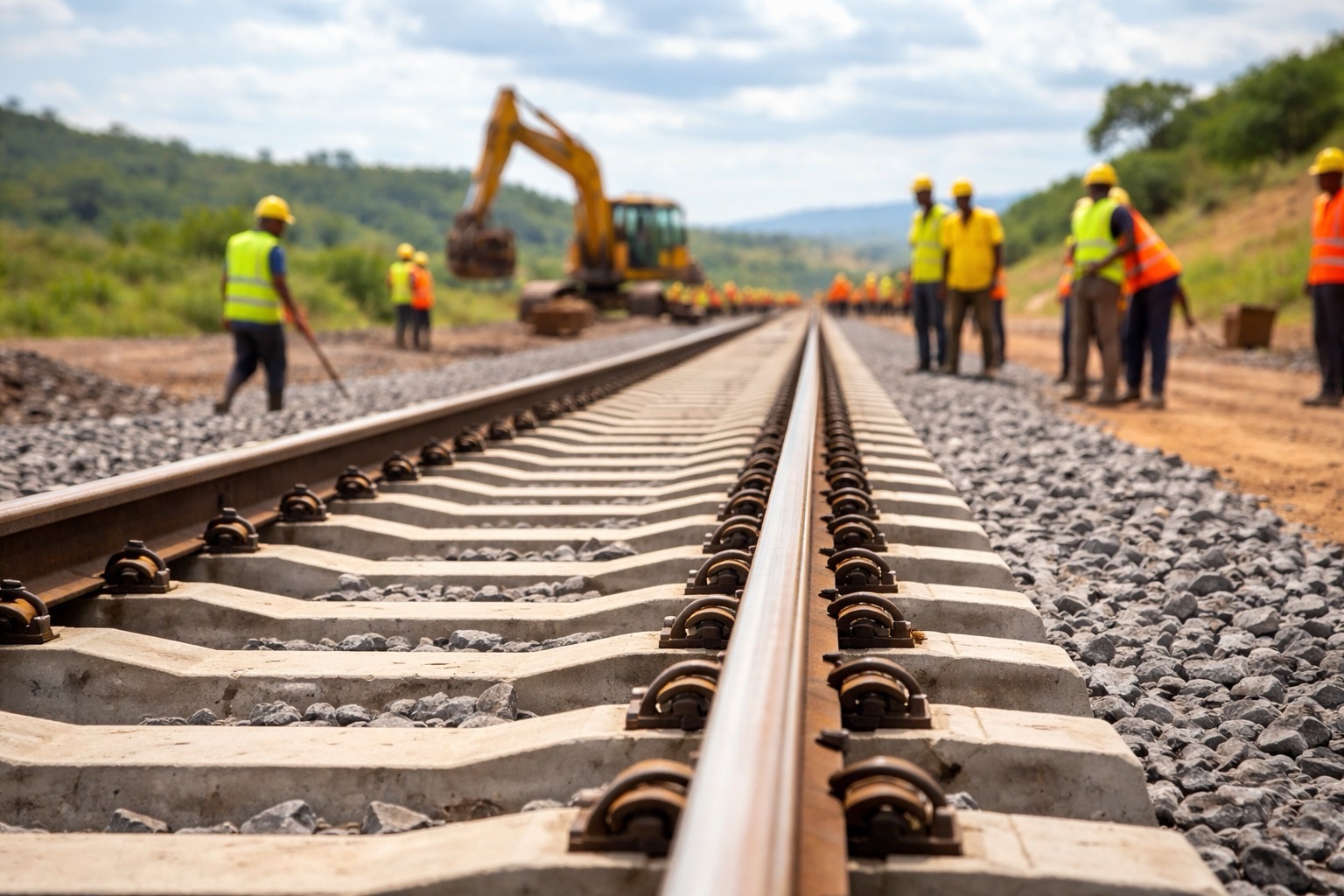
Tanzania’s renewed push into large-scale infrastructure is quietly rebalancing the country’s economic geography. The proposed 1,000km standard-gauge line from Mtwara to Mbamba Bay—extending inland to Mchuchuma and Liganga—would anchor a southern trade corridor long overshadowed by the central route to Dar es Salaam. If executed as planned, the railway will not merely move goods more efficiently; it will redefine the commercial logic of Mtwara Port.
At present, the port’s utilisation is constrained less by capacity than by hinterland connectivity. The railway addresses this bottleneck directly. By linking Mtwara to the mineral-rich southern highlands, it converts previously stranded resources into exportable commodities. The Liganga iron-ore deposits and Mchuchuma coal fields—together among the largest in East Africa—are viable at scale only with dependable bulk transport. Rail, rather than road, lowers unit costs and improves reliability, enabling sustained, high-volume flows. For Mtwara Port, this implies a structural shift from a modest regional facility to a specialised bulk-export hub.
The line’s strategic value extends beyond Tanzania’s borders. By connecting the Indian Ocean to Lake Nyasa, it creates a multimodal corridor that integrates rail and lake transport, effectively opening a southern gateway for Malawi and parts of northern Mozambique. Transit cargo, often decisive for port competitiveness, would no longer be the preserve of Dar es Salaam or Beira. In this sense, Mtwara’s growth prospects hinge as much on regional logistics as on domestic supply.
Agriculture provides a complementary, if less headline-grabbing, dividend. Southern Tanzania’s underexploited potential in crops, fisheries and livestock has long been hampered by high transport costs and post-harvest losses. Rail offers a cheaper, more predictable alternative to road haulage, encouraging scale production and improving market access. Over time, this could diversify Mtwara’s cargo mix, reducing reliance on minerals while increasing throughput stability.
Infrastructure of this kind tends to have second-order effects that are harder to quantify but equally consequential. Stations become nodes of commerce; logistics corridors attract investment; and previously peripheral regions gain economic relevance. The Mtwara Development Corridor, of which the railway is the backbone, is therefore as much a spatial-development strategy as a transport project.
None of this is guaranteed. Large rail schemes in Africa often falter on financing, coordination and execution risks. Yet if these constraints are managed, the Mtwara–Mbamba Bay line would mark a decisive shift: from a coast-focused, north–south trade pattern to a more balanced, corridor-driven economy. For Mtwara Port, the implication is clear. Its future will be determined less by what happens at the quay and more by what connects to it inland.