

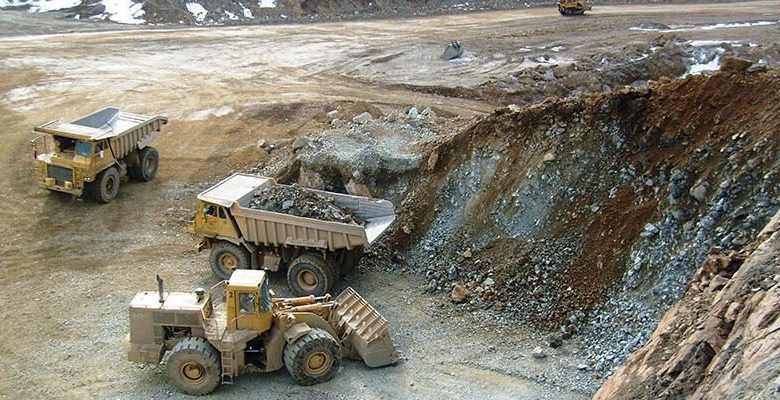
Tanzania is positioning its mining sector as a central pillar in its push toward a $1 trillion economy, as authorities ramp up investment, production, and policy reforms to unlock the country’s mineral potential.
Officials say the sector is already gaining momentum, supported by rising global demand for gold and critical minerals such as graphite, nickel, and rare earths—resources increasingly linked to clean energy and industrial supply chains.
Mining has become one of Tanzania’s fastest-growing sectors, contributing roughly 10% of GDP and generating a significant share of export earnings, with minerals accounting for more than half of total exports.
Revenue from the sector has also surged, with collections rising sharply in recent years and targets exceeding TZS 1 trillion annually, reflecting improved oversight, increased production, and stronger compliance measures.
The government is also prioritising value addition and local processing, alongside infrastructure upgrades to support mining regions and export corridors. Analysts say these measures are aimed at ensuring that growth in extraction translates into broader economic gains.
Tanzania’s long-term economic strategy, anchored in Vision 2050, hinges on sustained high growth rates and large-scale investment—conditions in which mining is expected to play a leading role alongside manufacturing and services.
While challenges remain, including infrastructure gaps and regulatory complexity, the sector’s expansion is increasingly seen as critical to Tanzania’s ambition of scaling its economy significantly over the coming decades.