

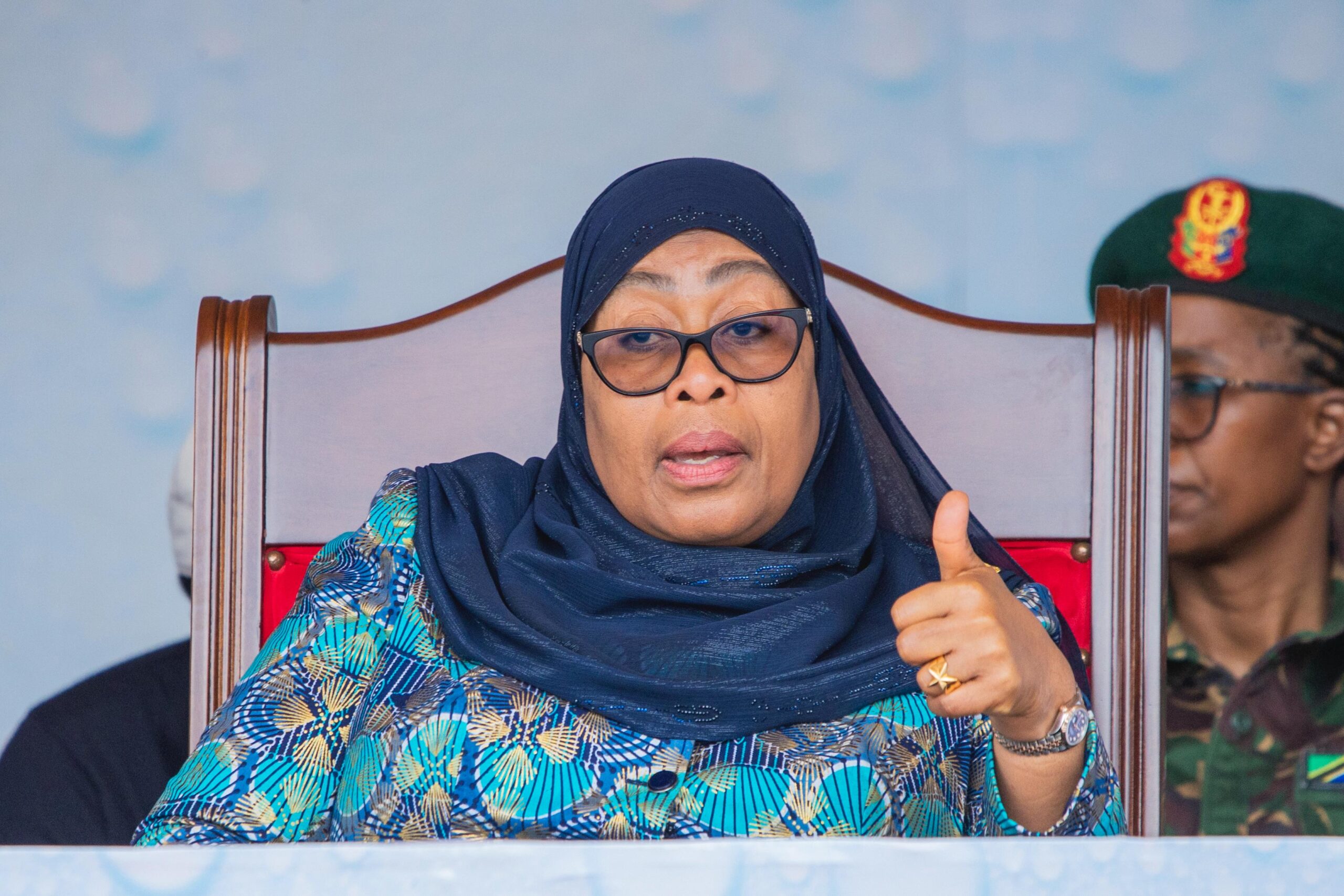
In the four years since President Samia Suluhu Hassan took office in March 2021, Tanzania has witnessed a comprehensive overhaul of its strategic infrastructure. From the historic activation of the Julius Nyerere Hydropower Project to the “rail renaissance” connecting the hinterlands, the sixth-phase government has prioritized projects that directly fuel industrialization and social welfare.
As the administration marks this milestone, we look at the major infrastructure and energy projects that have defined this era of transformation.
1. The Energy Revolution: Doubling Capacity
Perhaps the most defining achievement of President Samia’s tenure has been the stabilization and expansion of the country’s energy grid. By February 2025, Tanzania’s total electricity generation capacity had nearly doubled, surging to 3,796.71 MW from 1,889.84 MW in early 2024.
- Julius Nyerere Hydropower Project (JNHPP): Once a long-delayed dream, this flagship project is now 99.8% complete. As of early 2025, its turbines were already generating 1,880 MW, effectively eliminating the country’s history of power rationing and allowing the government to decommission costly diesel-powered plants.
- Rural Electrification: The push to light up rural Tanzania has reached near-universal levels at the village level. Between 2020 and 2024, the government connected 12,278 out of 12,318 villages (99.7%) to the national grid. The focus has now shifted to hamlets (vitongoji), with over 51% now electrified.
- Clean Cooking Agenda: Beyond generation, President Samia has championed the Clean Cooking Energy Agenda across Africa, launching national strategies to transition households away from environmentally harmful wood fuels.
2. A Rail Renaissance
The transport sector has undergone what officials call a “rail renaissance,” characterised by the operationalization of modern electric trains and the revival of regional trade routes.
- Standard Gauge Railway (SGR): On August 1, 2024, the electric train service from Dar es Salaam to Dodoma was officially launched. By March 2025, the service had already transported over 2 million passengers, generating 54 billion shillings in revenue.
- Regional Connectivity: The network is expanding rapidly. Construction is ongoing for the line linking Dar es Salaam to Mwanza, and funding has been secured for the Tabora–Kigoma line to facilitate trade with the DRC. Additionally, negotiations concluded in 2025 to begin the major rehabilitation of the TAZARA railway in June of that year, a move set to revitalize the southern corridor.
- Urban Transport: To decongest major cities, feasibility studies have been completed for modern urban railway systems in both Dar es Salaam and Dodoma.
3. Aviation and Logistics
To position Tanzania as a logistics hub for East and Central Africa, the government has heavily invested in air and sea connectivity.
- Air Tanzania (ATCL): The national carrier has expanded its fleet with seven new aircraft, bringing the total to 14 passenger planes and one cargo freighter. New routes have been opened to strategic destinations including Victoria Falls, Cape Town, and Accra.
- Port Upgrades: A massive $421 million upgrade of the Dar es Salaam Port has been implemented to boost competitiveness. To further decongest the port, construction has commenced on the Kurasini Logistics Terminal, which will feature a storage capacity for over 700,000 containers.
- Airport Infrastructure: A new Presidential Pavilion was inaugurated at Julius Nyerere International Airport (JNIA), and preparations are underway for new airports in Serengeti and Kagera to support the booming tourism sector.
4. Water and Digital Connectivity
Infrastructure improvements have extended to essential services, directly impacting the quality of life.
- Water Access: Through the execution of 1,633 water projects, access to clean water has risen to 79.6% in rural areas and 90% in urban centres.
- Digital Economy: To bridge the digital divide, the government, in collaboration with mobile operators, constructed 1,321 communication towers by late 2023, enhancing connectivity in underserved areas.
The Economic Impact
These infrastructure drives have been underpinned by a robust investment climate. In 2024 alone, the Tanzania Investment Centre registered 901 projects, breaking a decade-old record. The mining sector also saw significant reforms, with the government increasing its stake in Williamson Diamonds to 37% and acquiring shares in key graphite and nickel projects.
As the country heads further into 2025, the foundation laid by these mega-projects suggests a continued trajectory of growth, with the government now enjoying the fiscal space created by the financial self-reliance of entities like the Tanzania Railway Corporation (TRC).